A definitive list of things you can sell
14 options. No more, no less.

Hi everyone and welcome to this week's edition of Cheatcode. Today I have a great breakdown leading to a definitive list of things to sell. Meaning everyone who has ever sold anything sold one of these things.
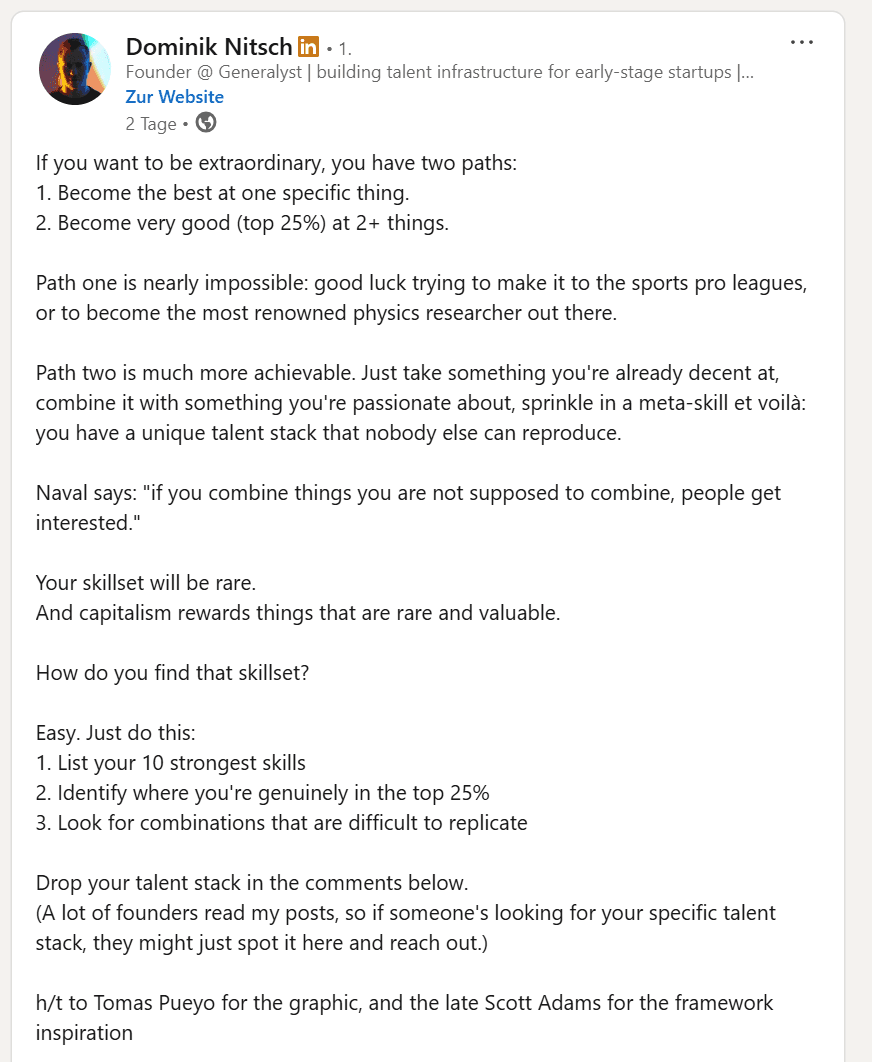
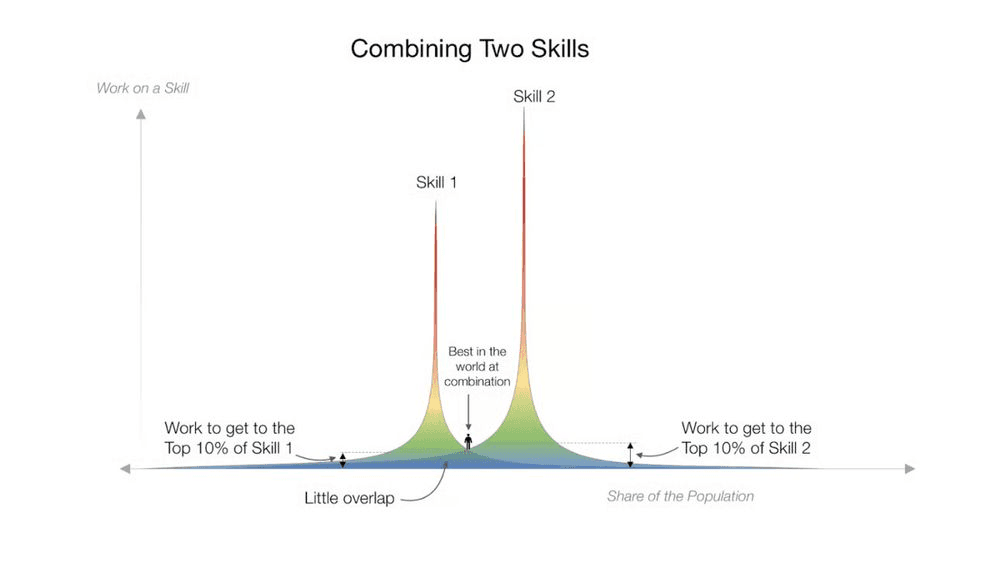
Then we have a snippet of a great LinkedIn post from Dominik from Generalyst, a friend of mine, about how to become extraordinary without having to be the Usain Bolt of your field.
Authors Note
On why I love definitive lists
I recently watched a video by Alex Hormozi that gave me exactly what I love: a complete definitive list. Not "some ideas", not "for example you could…", but all the options. Closed. Comparable. Decidable.
Most business advice leaves you with the feeling that somewhere out there, someone knows something you don't. A category you missed. A model that would have fit better. A definitive list like this kills that feeling. You're not choosing from what you happen to have seen, you're choosing from everything there is. Hormozi applied this to a question everyone asks when building a business or thinking about it: What can I actually make money with?
The answer: there are exactly 7 categories and each exists in two variants: physical or digital. That's it. No secret category for advanced players. 14 options, complete.
The 7 things you can sell
Products: Physical (water bottles, furniture, supplements) or digital (eBooks, Notion templates, Lightroom presets). The catch: physical needs capital, digital usually needs an audience first.
Services: You do something for others. Physical (mowing lawns, personal training, catering) or digital (running ads, building websites, editing videos). Great starting point for 99% of beginners.
Access: You sell entry. Physical (gym membership, co-working space, private club) or digital (Netflix, a paid newsletter, a members-only community).
Attention: You sell reach. Physical (billboard, magazine ad, event sponsorship) or digital (sponsored posts, newsletter ads, Google Ads).
Risk: You sell security. You take on someone else's uncertainty and charge for it. That can be an insurance policy, a product warranty, a service guarantee. Works offline and online.
Money: You sell capital. You get paid in interest or equity. (Business loans, angel investing, revenue-based financing).
Endorsement/Brand: You sell status and trust. Someone pays to be associated with your name, your audience, or your reputation. That can be a logo on a jersey, a co-branded product, a sponsored post, or a certificate. Works offline and online.
What to do with it?
Take the list. Cross out everything you don't understand. Cross out everything that requires starting capital. Cross out everything you don't comfortably think you could deliver on.
For most people, exactly one category remains: Services.
Not because Services are the most interesting option. But because you can start tomorrow. No inventory, no audience, no budget. Just you, a skill, and someone willing to pay for it.
An Interesting Take on How to Be Extraordinary
This is my take on how useful different internships are for working at a startup long-term, or for launching your own startup project. All of these are common internship options in the business landscape, and none of them are inherently wrong. I just think some offer more relevant learning for the startup world than others.